Immediate Hazard Mitigation
Neutralise the danger of collapsing branches or falling trunks threatening your family and residence.
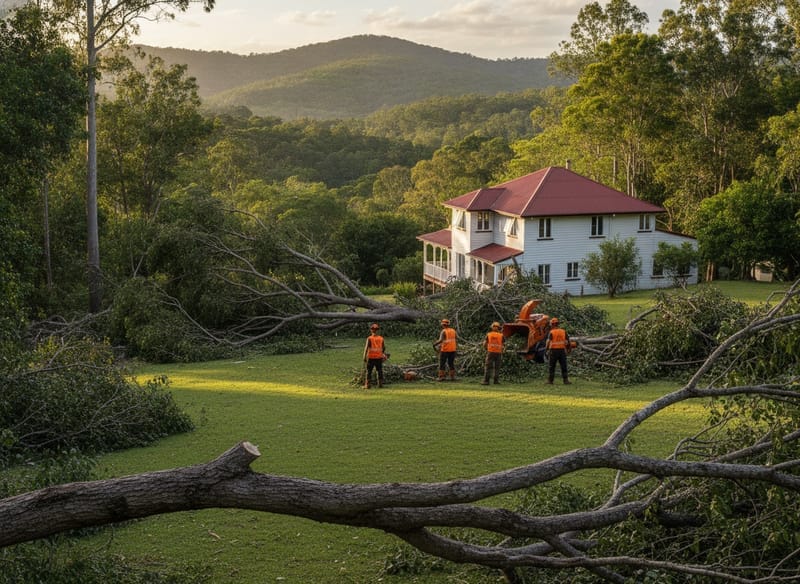
We make safe and remove fallen and dangerous trees threatening property, roofs, and driveways.
Attending urgent hazards across Elliott Heads, Innes Park, Coral Cove, and greater Bundaberg.
Our Emergency Tree Removal Elliott Heads service focuses on rapidly securing, dismantling, and clearing trees that pose an immediate danger to lives or property.
Elliott Heads is heavily exposed to summer thunderstorm downdrafts and low-pressure systems moving off Hervey Bay. High winds combined with water-saturated sandy ground cause whole-tree root plate lifting.
Neutralise the danger of collapsing branches or falling trunks threatening your family and residence.
Controlled dismantling ensures already damaged structures do not suffer further impact during removal.
Clear blocked driveways and access ways so you can enter and exit your property safely.
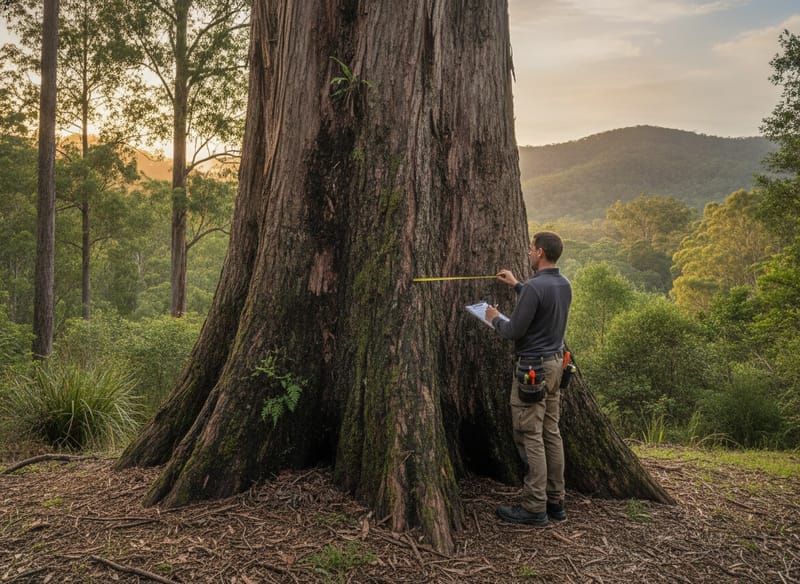
We evaluate structural loads, powerline hazards, and tension points on site.
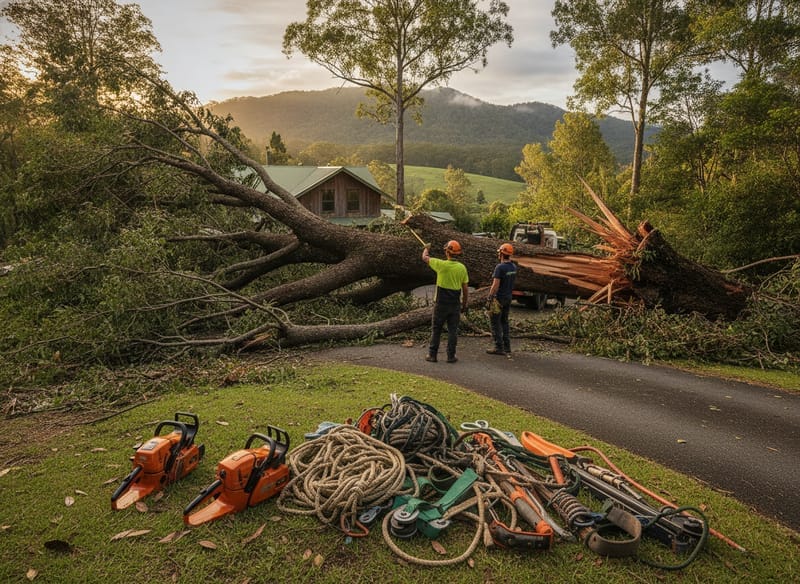
We establish exclusion zones and secure shifting trunks with heavy-duty rigging lines.
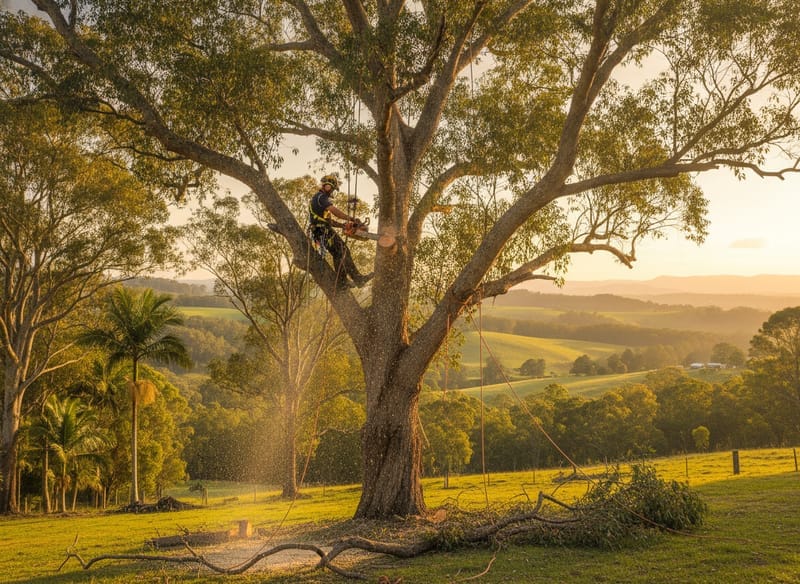
Our arborists cut and lower tensioned branches section by section to avoid sudden movements.
We clear the critical access paths, process timber through the chipper, and tidy the zone.
When severe summer storms and cyclonic winds batter the Bundaberg coastline, the damage to mature trees can be devastating and immediate. For local homeowners, builders, and property managers, securing prompt, reliable Emergency Tree Removal Elliott Heads is the crucial first step in protecting families and property. At Bundaberg Arborist, our local team of qualified climbers and machine operators is on standby to handle complex tree failures across the coast. Elliott Heads is uniquely exposed to salt-laden winds and driving summer rain, leaving towering Hoop Pines, sprawling Mango trees, and shallow-rooted She oaks vulnerable to sudden root heave in saturated sandy soils. When a tree falls on a roof, crushes a fence, or hangs dangerously over a driveway, you need arborists who actually understand the local terrain. It goes to the top of the list with the right heavy equipment to make your site safe, mitigate further damage, and provide clear documentation for your insurance provider. Whether you are dealing with a snapped Cocos Palm or a wind-thrown Moreton Bay Fig, our team is equipped to resolve the crisis safely.
When a massive limb snaps or an entire Moreton Bay Fig uproots in your backyard, the temptation to fire up a hired chainsaw can be overwhelming. However, DIY storm cleanup is incredibly dangerous. Wind-thrown timber is highly unpredictable, storing massive amounts of kinetic energy in tension and compression wood. One incorrect cut can cause the trunk to barber-chair or violently roll, leading to catastrophic injury or further structural damage to your home. Under-qualified operators are equally risky. Handing an emergency job to someone with a ute and a chainsaw often results in botched removals, property damage, and voided insurance claims. If a partially fallen Cotton Tree or She oak is improperly assessed, it can cause secondary collapses onto adjacent structures or overhead power lines. Our AQF Level 3 climbers and AQF Level 5 consulting arborists eliminate these risks. We utilise sophisticated rigging techniques and mechanical advantage to systematically dismantle hazardous trees without relying on guesswork. By securing the site quickly and executing a safe, AS4373-compliant remedial prune or complete removal, our team ensures your property is protected, your insurance requirements are met, and the immediate danger is completely neutralised.
When an east coast low strikes the Bundaberg coast, mitigating the damage requires specialized heavy equipment and advanced arboricultural techniques. We deploy a comprehensive fleet to safely dismantle compromised trees under extreme conditions.
We prioritise immediate danger reduction. Our climbers use heavy-duty rigging, static ropes, and winches to secure split trunks or hung-up limbs in the canopy, preventing imminent failure while full removal operations are planned and staged safely.
For large Hoop Pines or Norfolk Island Pines that have collapsed onto homes or sheds, we coordinate specialized crane lifts. This allows us to extract massive timber sections vertically out of tight residential blocks without placing any additional weight on the damaged roof structure.
Storm-damaged trees are under immense physical stress. Our AQF Level 3 operators utilise advanced chainsaw cross-cutting techniques to safely release tensioned wood, preventing explosive kickback and ensuring the trunk drops safely to the ground in a controlled manner.
We deploy high-capacity 12-inch wood chippers to rapidly process fallen Pandanus, She oak, and Mango foliage on site. Heavy timber and saturated root balls are loaded onto our tipper trucks using mini-loaders, leaving your property completely clear of dangerous storm debris.
When disaster strikes, absolute clarity and speed are essential. We have refined our emergency response protocol to ensure rapid deployment and seamless coordination from the moment you call until the final log is removed from your coastal property. First, we execute a Dispatch and Assessment. Depending on the severity of the storm event across Bundaberg, we aim to get a crew to you as fast as we safely can. Upon arrival, our priority is assessing the immediate hazard, identifying structural risks, and establishing a safe exclusion zone around the fallen or leaning tree. Second, we conduct crucial Photographic Documentation. Before any cutting begins, we photograph the damage and the tree's condition. This evidence is vital for your home insurance claims and serves as proof of the emergency for council compliance. We also provide itemised quotes formatted specifically for insurance assessors to streamline your claim. Next, we perform the Make-Safe and Removal Operations. Using EWPs, spider lifts, or rope-access techniques, our team stabilises the structure and carefully dismantles the hazardous timber piece by piece. Finally, we complete Debris Processing and Site Handover. All foliage is chipped, heavy logs are hauled away, and the site is left entirely safe, allowing your builders or roofers to begin their repair work.
Handling storm-damaged trees requires strict adherence to safety and compliance frameworks. Our team is fully insured with comprehensive public liability and WorkCover, giving you absolute peace of mind during chaotic emergency situations. Every climber holds AQF Level 3 qualifications, ensuring all chainsaw operations and at-height works meet rigorous industry safety standards. We also ensure full compliance with the Bundaberg Regional Council Planning Scheme 2015. For emergency removals, we provide the necessary photographic documentation and written AQF Level 5 arborist assessments required to justify the immediate clearing of dead, dying, or imminently dangerous trees, ensuring you remain completely protected under local environmental and disaster regulations.
Handling an Emergency Tree Removal Elliott Heads job requires more than just a chainsaw; it requires a deep understanding of the local coastal environment and regulatory landscape. Properties along this coastal strip are frequently battered by summer storms and cyclonic remnants, causing salt burn and wind shear on established She oaks, Cotton Trees, and towering coastal pines.
When a tree fails here, council regulations still apply. While the Bundaberg Regional Council Planning Scheme 2015 includes a Coastal protection overlay and a Sea turtle sensitive area overlay near Mon Repos, emergency provisions exist for imminently dangerous trees.
Crucially, following the devastating Burnett River floods, a state disaster clearing exemption is active until March 2027. This allows residents to clear fallen trees to prevent property loss or maintain infrastructure. We help you navigate these unique local rules by gathering the necessary photographic proof and written justifications, ensuring your emergency clearing remains entirely lawful and compliant.
Once the immediate hazard is removed, the recovery phase begins. We highly recommend scheduling professional stump grinding to remove trip hazards and prevent subterranean termite infestations in the remaining deadwood across your block. In the sandy coastal soils of Elliott Heads, violent storms often cause unseen root heave in adjacent trees. It is essential to monitor your remaining canopy for signs of leaning, soil cracking, or sudden dieback. Contact us to schedule an AQF Level 5 consulting arborist health check. We can assess your surviving trees and perform AS4373-compliant remedial pruning to reduce wind resistance and safeguard your property against the next severe weather event.
Emergency tree work pricing in Elliott Heads depends on hazard complexity, structural involvement, and equipment required.
We provide clear, transparent upfront pricing before commencing emergency make-safe works.
We provide emergency tree removal services across Elliott Heads and surrounding coastal communities.
Call our experienced local tree crews to safely secure and remove hazardous fallen trees.
Get a Free Quote