Improved Safety
Remove heavy deadwood and weak branches before high winds drop them onto your home or vehicles.
Standards-compliant crown thinning, deadwooding, and branch management.
Expert tree pruning across Bundaberg North and the Burnett River basin
Tree pruning in Bundaberg North is essential for maintaining tree health, allowing light into yards, and reducing limb failure hazards during wet summer storms.
Fast sub-tropical growth cycles in Bundaberg North cause mature Mangoes, Figs, and Poincianas to produce heavy horizontal limbs. Regular structural pruning prevents end-weight overload, especially when Burnett River soils become soft during monsoon rain.
Remove heavy deadwood and weak branches before high winds drop them onto your home or vehicles.
Proper AS4373 cuts reduce pest vulnerability, fungal ingress, and rot pockets in your canopy.
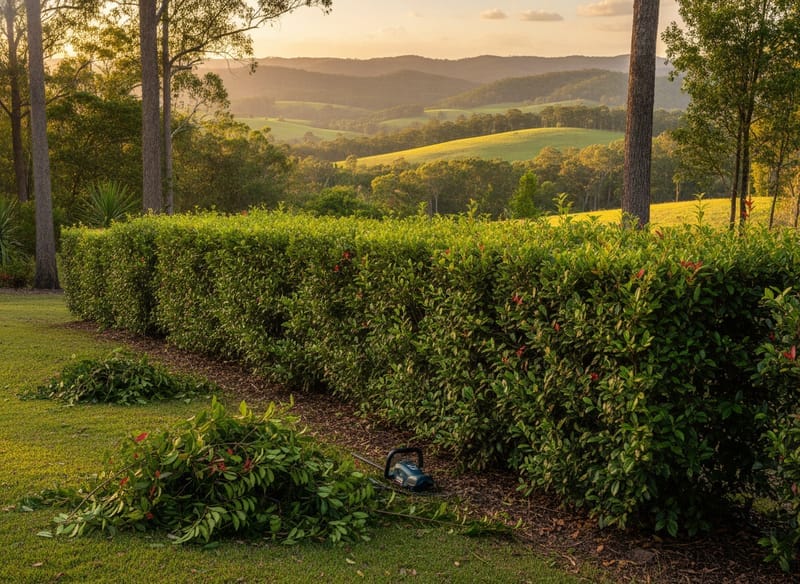
Allow morning sun to filter through to your turf and garden beds while keeping cooling shade.
We assess branch structure, deadwood presence, union integrity, and clearance requirements.
We recommend the correct AS4373 pruning methods (thinning, lifting, or reduction) with a fixed quote.
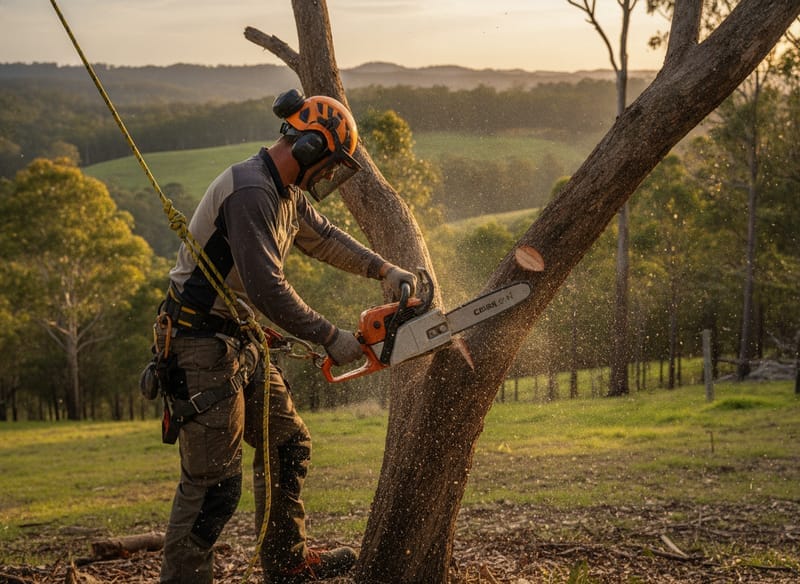
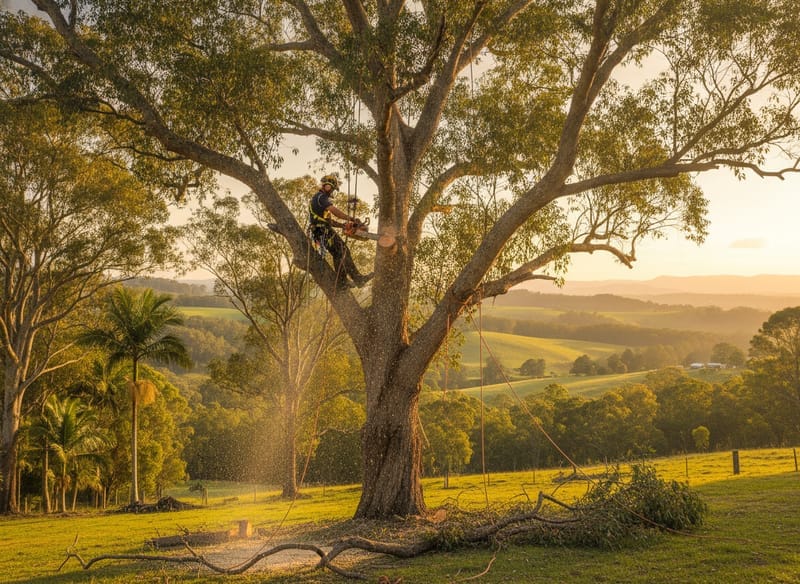
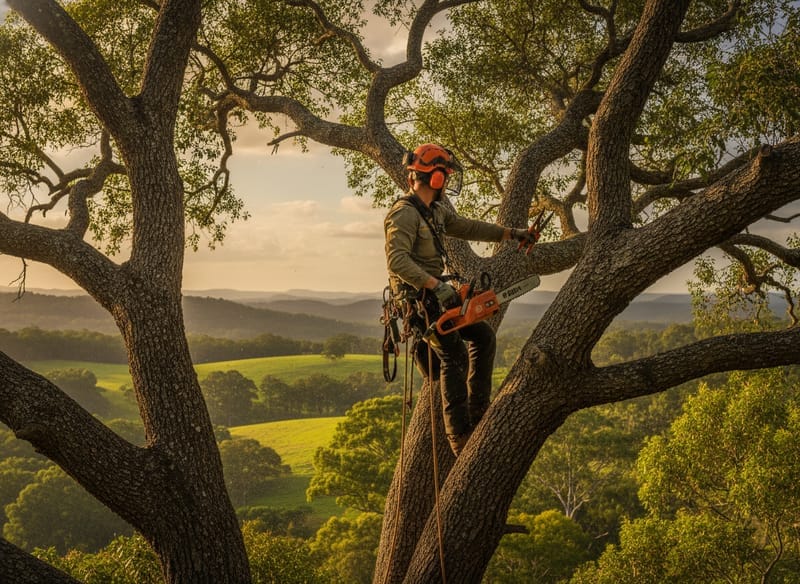
Our qualified arborists climb or use access gear to execute precise, clean branch cuts.
All prunings are processed through our chipper and the site is thoroughly raked and cleared.
If you want to keep your established shade trees healthy, safe, and looking their best, you need professional Tree Pruning Bundaberg North. As the local experts at Bundaberg Arborist, we understand that proper tree pruning isn't just about hacking back branches; it is about expertly managing the tree's structure for the long term so it can thrive in our local environment.
Bundaberg North is known for its beautiful old heritage homes and mature leafy canopy. From giant backyard Mangos to sprawling Jacarandas and Moreton Bay Figs, these trees are massive assets to your property. However, our subtropical climate, heavy summer rains, and severe wind events mean that unmanaged canopies can quickly become serious hazards.
We are your local, hands-on climbing team. We don't just reduce a tree's size; we actively improve its structural integrity. Whether you need clearance over the roof of your historic Queenslander, line clearance for overhead services, or general canopy thinning before the wet season hits, our arborists provide precision care that protects your property and extends the life of your trees.
One of the biggest mistakes property owners make is hiring an unqualified operator to "lop" or "top" their trees. Lopping involves cutting main stems and branches indiscriminately, leaving massive, ugly stubs. This practice is completely against the Australian Standard (AS4373) and causes irreversible structural damage to the tree. In a subtropical climate like ours, lopped trees respond in panic by pushing out rapid, weakly attached epicormic growth. When the heavy summer storms roll off the Burnett River, these poorly attached, fast-growing branches are the first to snap and crash onto roofs, cars, or fences. Additionally, large flush cuts or jagged stubs act as direct entry points for decay, rot, and disease, ultimately shortening the tree's life and making it fundamentally unsafe. Over-thinning, often referred to as "lions-tailing," is another common error. Stripping the inner foliage and leaving a heavy tuft at the end of the branch drastically shifts the wind load to the branch tips, making the limb highly susceptible to breaking in strong gusts. Our team solves these problems by pruning strictly to the AS4373 standard. We make precise cuts at the branch collar, which allows the tree to heal over the wound naturally. By carefully retaining the right amount of live foliage, we ensure your trees remain structurally sound and beautiful for years to come.
As qualified arborists, our team utilizes specific, targeted pruning techniques governed by the AS4373 Pruning of Amenity Trees standard. We meticulously assess each tree individually to determine the right combination of methods.
We selectively remove small, live branches throughout the canopy to reduce wind resistance and allow light to filter through, preserving the natural form. We strictly adhere to removing no more than 25–30% of the live foliage per prune to prevent tree shock.
This involves safely navigating the canopy to carefully remove dead, dying, or diseased branches. This is a critical risk-reduction measure for trees overhanging driveways, pedestrian paths, or living areas, preventing dead timber from dropping during Bundaberg's severe summer storms.
We carefully remove the lower branches of the canopy to increase vertical clearance. This is highly effective for clearing sightlines, making room for vehicles, or creating usable, safe space underneath sprawling trees like Poincianas or large gums.
Targeted at younger trees to establish a strong, singular dominant leader and well-spaced scaffold branches. Early structural correction prevents co-dominant stems and significantly reduces the likelihood of structural failure as the tree matures.
When a tree has outgrown its space, we perform selective shortening of branches back to a suitable lateral branch. Unlike destructive lopping, these cuts are always made at proper branch unions to maintain the tree's structural integrity and aesthetic shape.
We address very specific property issues, such as clearing a roofline, creating a safe buffer around overhead service lines, or removing lateral branches that are encroaching on neighbouring boundaries.
From the moment you contact our team, we follow a streamlined, professional process to ensure your pruning job is executed flawlessly and safely. It begins with a comprehensive on-site assessment. We visit your property to evaluate the tree's health, structural integrity, and the surrounding environment. We listen to your goals, whether that involves increasing natural light, reducing storm risk, or simply clearing a building line. We then provide a clear, itemised quote detailing exactly which AS4373 pruning methods will be applied. Once approved, our team arrives with the right equipment for the job. In flat areas with good access, we may utilize an Elevating Work Platform (EWP). However, for tight residential blocks with narrow side access between older Queenslander homes, our skilled climbers will use advanced rope-access techniques to safely maneuver through the canopy and lower limbs securely. All pruning cuts are made precisely at the branch collar using specialized top-handle climbing saws. As the branches are lowered to the ground, our ground crew processes the material. We run the branches through our heavy-duty wood chipper, reducing the green waste to high-quality mulch. Finally, we conduct a meticulous site clean-up. We rake and clear the area, leaving your yard tidier than we found it. We can either leave the fresh mulch on-site for your garden beds or haul it away in our tipper trucks.
Tree work is inherently dangerous, particularly when navigating mature trees over houses or powerlines. That is why our climbers hold AQF Level 3 in Arboriculture qualifications, ensuring they are trained in advanced rope-access techniques, aerial rescue, and precision chainsaw operation. If your property requires a formal assessment for development or council approval, our AQF Level 5 consulting arborist can provide the necessary reporting.
We are a fully insured local business, carrying comprehensive Public Liability and WorkCover insurance for all our staff. We never compromise on safety. From utilizing specialized top-handle climbing saws for precise in-tree work to deploying EWPs and tracked spider lifts where access permits, our gear is strictly maintained. We also operate under strict traffic management protocols for any roadside pruning tasks.
When undertaking Tree Pruning Bundaberg North, local knowledge is absolutely essential. Bundaberg sits on a flat flood plain, but older suburbs present distinct tight access challenges, complex overhead powerlines, and heritage constraints. Many properties fall under the Bundaberg Regional Council’s Heritage and neighbourhood character overlay or the Biodiversity areas overlay code, meaning certain mature trees may require an assessment before significant pruning can commence. Following the severe Burnett River floods of March 2026, a disaster clearing exemption is currently active until March 2027. While this allows for the removal of immediate hazards to prevent property damage, it is crucial that the work is documented properly and carried out safely by professionals. We can help assess storm-damaged trees to see if corrective pruning can save them rather than resorting to complete removal. We frequently prune large backyard Mangos that require regular crown reduction to remain manageable and productive in suburban yards. We also manage massive Moreton Bay Figs and Jacarandas, carefully thinning their canopies to reduce wind load before the summer storm season hits the coast and inland flats.
After a professional prune, your tree will naturally compartmentalise the pruning wounds. Do not apply pruning paints, tars, or sealants; these old-fashioned remedies trap moisture and actually encourage decay. Simply let the tree heal naturally over the clean branch collar cuts we have made. We highly recommend spreading the fresh mulch we generated from the chipped branches over the tree's root zone, keeping it slightly away from the trunk. This helps retain vital soil moisture during our hot Bundaberg summers. Keep an eye on the canopy over the next few seasons; fast-growing species may require another round of structural Tree Pruning Bundaberg North in three to five years to maintain their ideal size, health, and form.
Pruning costs in Bundaberg North depend on canopy volume, tree height, and accessibility.
We provide detailed written quotes specifying exact AS4373 pruning specifications before starting.
We provide professional tree pruning across Bundaberg North and adjacent Burnett River suburbs.
Improve canopy health and storm safety with AS4373-compliant pruning.
Book a Pruning Quote