Controlled Tree Size
Keep large trees at a manageable scale that suits your residential block and roofline.
Professional height reduction, canopy management, and safe tree cutting solutions.
Canopy control and tree cutting across Bundaberg North
When trees in Bundaberg North grow too tall for their location, overhang powerlines, or block sunlight, homeowners often search for tree lopping. We deliver professional canopy reduction and tree management that solves the space issue while preserving tree stability.
Fast-growing backyard trees in Bundaberg North such as Cocos Palms, Mangoes, and African Tulips frequently outgrow suburban house blocks. Indiscriminate topping leads to rapid decay in our humid subtropical climate, so we apply targeted arborist reduction techniques to achieve height control safely.
Keep large trees at a manageable scale that suits your residential block and roofline.
Prevent heavy top-weight from catching summer thunderstorm gusts and snapping branches.
Avoid the rot pockets and hazardous multi-stem regrowth caused by traditional crude tree lopping.
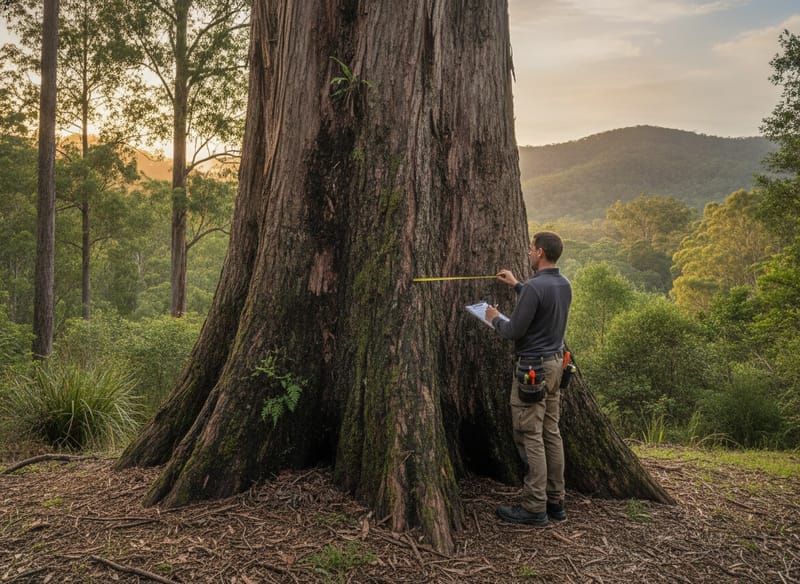
We inspect the tree, evaluate height constraints, and determine the safest reduction method.
We explain the difference between crude lopping and proper canopy reduction, providing a fixed quote.
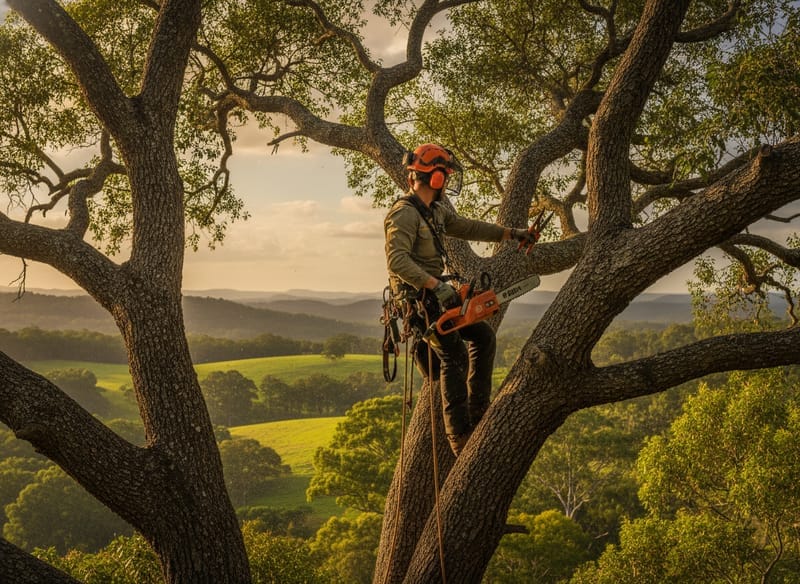
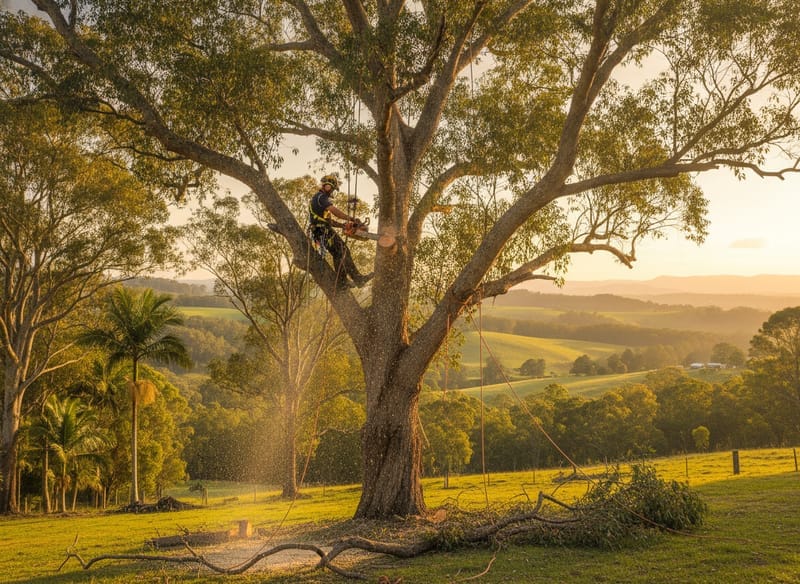
Our qualified climbers carefully cut back the canopy to appropriate growth points using rigging gear.
All cut branches are chipped on site and removed, leaving your property tidy.
When property owners ask for Tree Lopping Bundaberg North, they are usually dealing with a tree that has grown out of control and needs to be brought safely back down to size. Whether it is a massive backyard Mango shading out the entire lawn, or an aging Poinciana dropping limbs onto the roof, our subtropical climate means canopies grow aggressively during the wet summer months.
Our team of qualified arborists provides safe, professional canopy management for homeowners, acreage owners, and property managers throughout Bundaberg North and surrounding suburbs like Bundaberg Central, Gooburrum, and Oakwood. We understand the specific challenges of managing mature trees on the Burnett flood plain, from overhead powerline clearance in older streets to maintaining large-scale vegetation on river-adjacent acreage.
While "lopping" is the common term used to describe making a tree smaller, our climbers apply precise, AS4373-compliant pruning techniques to achieve the size reduction you need without destroying the structural integrity of your tree. We bring the right trucks, wood chippers, and rope-access skills to get the job done efficiently and safely.
The biggest problem with traditional tree lopping—often called "topping" or "heading back"—is that it indiscriminately hacks branches off at random points, leaving large, ugly stubs. When unqualified operators perform these aggressive cuts, they destroy the tree's natural defence mechanisms and expose the wood to accelerated decay. Even worse, traditional topping forces the tree into a panic response, causing it to rapidly shoot out weak epicormic growth. These new branches are poorly attached to the outer bark rather than the solid heartwood. In a region like ours that experiences fierce summer thunderstorms and cyclonic winds between December and March, this weak regrowth creates a massive hazard. A badly lopped tree is far more likely to drop limbs on your home during the next big blow. Our solution is strict adherence to AS4373 (Pruning of Amenity Trees). Instead of hacking branches in half, our climbing arborists perform target pruning and branch collar cuts. By reducing the canopy back to appropriate lateral branches, we achieve the size reduction you are looking for while maintaining the tree's natural shape and structural strength. This proper horticultural approach means the tree heals faster, looks better, and remains vastly safer during Bundaberg's severe weather events.
When you need a tree made smaller, our arborists assess the site and apply the specific, standard-compliant pruning method required to solve your problem safely.
The correct horticultural approach when a customer requests a height reduction. We selectively cut back the outer canopy to appropriate lateral branches, reducing the overall height and spread of the tree while preserving its natural form. We typically remove no more than 25–30% of the live foliage in a single prune to avoid stressing the tree.
When a tree is encroaching on usable space, we remove the lowest branches to provide vertical clearance. This is essential for large shade trees like Moreton Bay Figs or Hoop Pines where lower limbs are obstructing driveways, pedestrian pathways, or rubbing against Queenslander roofs in Bundaberg North.
To reduce wind resistance during East Coast Lows and cyclones, our arborists selectively remove secondary branches from within the canopy. This allows wind to pass harmlessly through the tree and lets more natural light reach your lawn or garden, all without altering the overall size or shape of the tree.
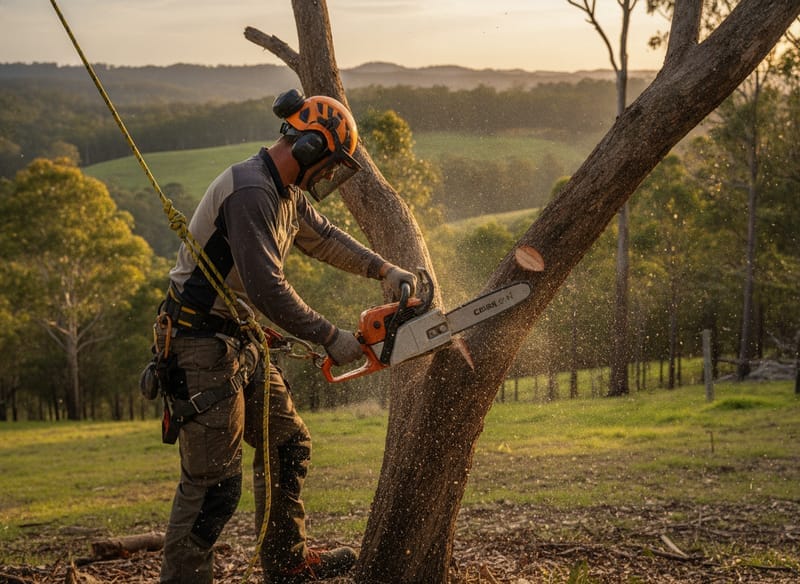
Targeted removal of specific problem limbs that are interfering with overhead service lines or resting on buildings. Our team uses precision rope-access techniques and top-handle chainsaws to safely dismantle these overhanging limbs piece by piece, dropping them safely to the ground without damaging the property below.
Booking an assessment for Tree Lopping Bundaberg North begins with a thorough site inspection by one of our experienced arborists. We start by visiting your property to assess the tree's health, species, and structural integrity. We listen to what you want to achieve—whether that is gaining more sunlight, clearing a roofline, or reducing storm risk—and then outline a compliant pruning strategy that meets your goals. Once the quote is approved, our team arrives fully equipped with our own tipper trucks, high-capacity chippers, and climbing gear. For sites with clear access, we may utilise Elevating Work Platforms (EWPs). However, for the tight side gaps and fenced backyards common in older Bundaberg North properties, our climbers use advanced rope-access techniques to navigate the canopy and carefully lower heavy limbs using rigging systems. All cut material is processed. We run the branches through our 12-inch wood chippers, turning bulky debris into valuable mulch. We can leave this mulch on-site for your gardens, or our trucks will cart it entirely away. Finally, our ground crew rakes and cleans the site, ensuring your yard is left spotless and the tree is beautifully and safely reduced.
Tree work is high-risk, which is why compliance and qualification are non-negotiable for our business. Our on-the-ground team consists of AQF Level 3 climbing arborists, fully trained in rope access, aerial rescue, and chainsaw operation. For complex development sites or council disputes, our AQF Level 5 consulting arborist can provide formal arboricultural reports and AS4970 tree protection plans.
We are comprehensively covered with Public Liability insurance and WorkCover for all employees. Every job is executed in strict alignment with AS4373 (Pruning of Amenity Trees) to ensure the health of your vegetation, and our operators hold all required tickets, including Working at Heights, EWP licences, and First Aid. You are hiring a thoroughly professional, locally based arboriculture team.
Bundaberg North presents unique arboricultural challenges due to its position on the Burnett River flood plain. The catastrophic Burnett River floods of March 2026, which peaked near 7.4m, left widespread damage across the suburb. Consequently, the state disaster clearing exemption currently runs until March 2027, allowing residents to manage hazard trees and storm damage to protect life and property without the usual council delays. Outside of this disaster window, tree work must comply with the Bundaberg Regional Council Planning Scheme 2015. While there is no blanket tree preservation order, you must check if your property falls under the Biodiversity areas overlay code, which protects significant vegetation and riparian corridors along the river. The local canopy is a mix of fast-growing backyard Mangos, towering Jacarandas, and aging Hoop Pines that require careful, regular canopy reduction rather than one-off hacking. Our wet, subtropical summers trigger explosive growth, meaning a tree that looks fine in October can become a heavy, waterlogged hazard by February. Additionally, street trees fall under Local Law 1 and cannot be pruned by residents—these remain strictly Council's responsibility.
After a professional canopy reduction, your tree will need a brief period to recover. We recommend giving the tree a deep, slow watering during dry spells to reduce stress, while keeping heavy machinery or parked cars off the structural root zone to prevent soil compaction.
Monitor the tree for any explosive epicormic growth, though our AS4373-compliant cuts are designed to minimise this. Because Bundaberg has a warm, wet subtropical climate, trees recover and regenerate quickly. We recommend scheduling a visual inspection every 2 to 3 years to maintain the reduced canopy size, ensuring it never becomes an overgrown storm hazard again.
Canopy reduction and tree lopping costs in Bundaberg North are based on the tree's height, density, and access.
We provide transparent, fixed written quotes outlining all reduction work and waste disposal.
We provide canopy management and tree cutting across Bundaberg North and neighbouring suburbs.
Get safe canopy height reduction and tree trimming from qualified arborists.
Request a Free Quote