Restored Yard Safety
Eliminate dangerous overhead hangers and sharp, broken branch stubs across your lawn.
Comprehensive post-storm cleanup, hanger removal, and fallen tree processing for coastal properties.
Providing storm damage cleanup across Bargara, Innes Park, Burnett Heads, and Bundaberg.
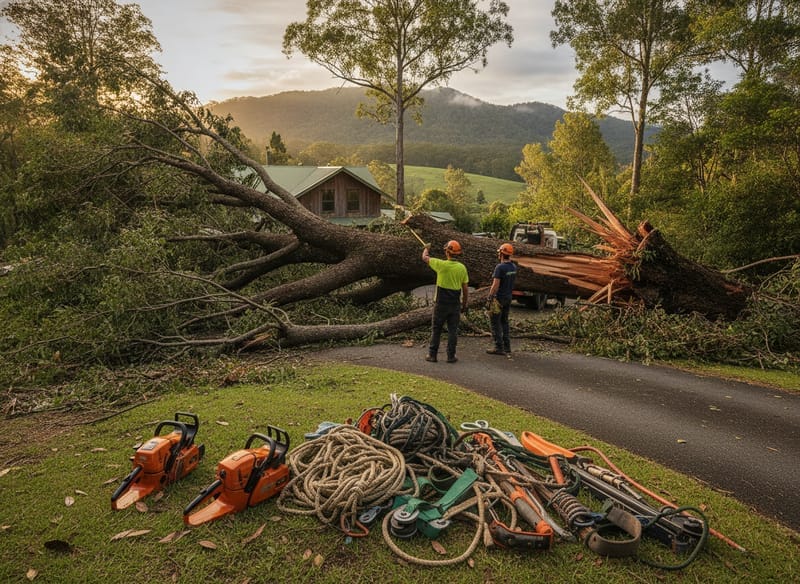
Subtropical storms, tornadic winds, and coastal gales frequently leave Bargara properties strewn with fractured limbs, uprooted trees, and dangerous hanging branches. Our storm damage tree removal Bargara service clears debris, restores tree canopies, and removes hazardous structural failures.
Bargara's history includes intense ex-tropical cyclone winds and convective summer storms. Saturated coastal sands combined with severe wind shear frequently cause shallow-rooted species like she-oaks and broad-leaved paperbarks to fail at ground level.
Eliminate dangerous overhead hangers and sharp, broken branch stubs across your lawn.
Skilled restorative pruning allows split or torn trees to recover rather than requiring complete removal.
Transform chaotic piles of storm debris into tidy, usable garden mulch.
We survey your Bargara property to identify all fallen timber, hung-up branches, and structurally cracked stems.
We address the most dangerous hanging branches and unstable trunks first.
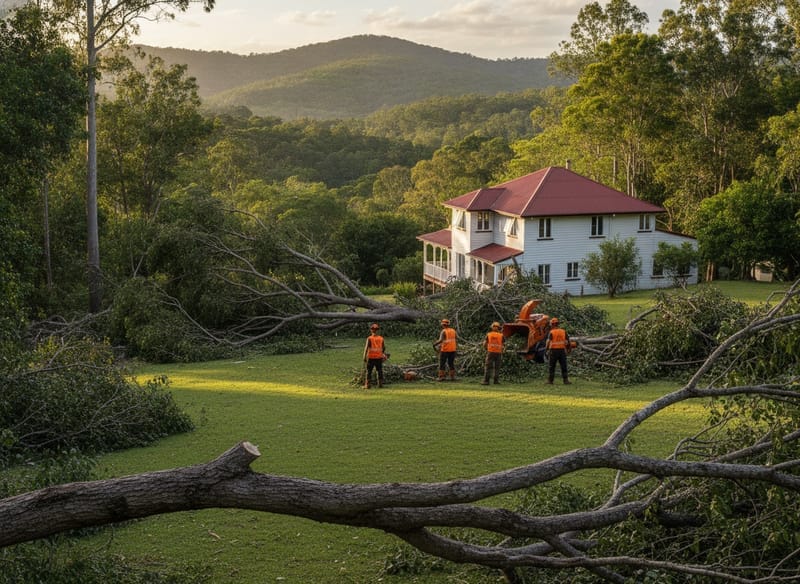
Our team feeds all fallen branches into the chipper and cuts trunk sections into manageable firewood or removal logs.
We cleanly prune torn branch stubs on standing trees to prevent rot and pest infestation.
When severe weather strikes the coast, securing rapid and reliable Storm Damage Tree Removal Bargara is critical for the safety of your property. Living in our subtropical climate means putting up with intense summer storms, ex-cyclones, and heavy coastal winds that easily compromise large canopies. Bargara and the surrounding coastal strip, from Burnett Heads to Elliott Heads, are highly exposed to these elements. Saturated sandy soils combined with gale-force winds frequently result in root-plate failures, snapped trunks, and massive limb drops on established residential blocks. Our team understands the immediate stress a fallen tree causes. Whether a towering Norfolk Island Pine has dropped heavy debris onto your roof, or a salt-burnt Casuarina is leaning dangerously over your driveway, we bring the heavy equipment and local expertise needed to clear the hazard. We do not just hack away at the mess; our AQF Level 3 climbing arborists systematically dismantle the failed timber to protect your assets and restore your peace of mind. We provide targeted, priority response across the Bundaberg coastline. From emergency make-safes for insurance claims to full-scale removal of wind-thrown trees on acreage, our climbers, trucks, and wood chippers are ready to deploy when you need us most.
Following a major weather event, the temptation to fire up a hired chainsaw and tackle fallen timber can be overwhelming. However, storm-damaged trees are incredibly unpredictable and carry immense stored energy. Trunks resting on houses, vehicles, or uneven ground are subjected to severe tension and compression forces. A single incorrect cut by an untrained homeowner can cause the timber to violently snap, roll, or spring back, leading to catastrophic injuries or further property destruction.
Another major risk is dealing with hung-up branches—heavy limbs that have snapped but remain suspended high in the canopy. These widow-makers can fall at any moment with the slightest breeze. Hiring under-qualified operators or temporary storm-chasers also leaves you exposed. They often lack the proper insurance, use unsafe topping techniques that breach AS4373 standards, or leave behind a dangerous mess that council or your insurer will question.
Our team takes a systematic, highly qualified approach to every removal. We utilise correct felling cuts, advanced rope rigging, and deep arboricultural knowledge to read the tension in fallen timber. By choosing us, you guarantee that the hazard is neutralised safely, your insurance documentation is professionally handled, and your property is protected from secondary damage.
Every storm-damaged site in Bargara presents unique hazards, tight access issues, and structural risks. Our team utilises a range of specialised arboricultural techniques to dismantle and process failed timber safely.
We conduct an immediate hazard assessment, tagging trees by priority. Immediate structural threats, fallen trees on roofs, and trees blocking driveway access are targeted first, securing the site before full processing begins.
Our ticketed chainsaw operators carefully read the structural loads on wind-thrown trees, using highly specific release cuts to prevent the timber from rolling, splitting, or springing violently during cross-cutting.
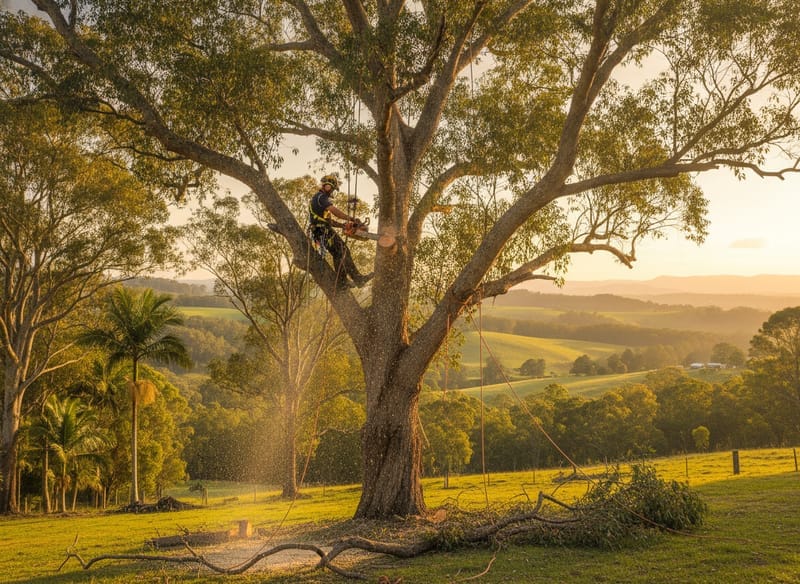
For hung-up limbs suspended in surviving canopies, our AQF Level 3 climbers use single and double-rope access techniques, pulleys, and friction devices to safely lower heavy debris away from roofs and powerlines without causing further impact damage.
When a large tree has uprooted completely in Bargara's sandy soil, the massive root ball can snap violently back into its cavity once the trunk is severed. We safely isolate and detach the root plate to prevent sudden, dangerous ground movement.
We process all cleared timber on-site. Using commercial 12-inch capacity wood chippers and high-powered ground saws like the MS500i, we convert dense canopy debris into manageable mulch, leaving your property completely clear.
When you call us for Storm Damage Tree Removal Bargara, our process is designed to be swift, safe, and completely transparent from the moment we answer the phone. Step 1: Emergency Assessment and Quoting. We deploy to your Bargara property to assess the storm damage. We identify immediate hazards, evaluate access constraints between tight coastal boundaries, and provide a detailed, itemised quote. This documentation includes essential before-photos and clear job lines, making it perfect for direct submission to your insurance company. Step 2: Securing the Site. Before any chainsaws start, we establish a safe working zone. We implement traffic management if a Hoop Pine or Moreton Bay Fig has fallen across a roadside boundary, and ensure all residents and pets are kept at a strictly safe distance. Step 3: Systematic Dismantling. Using our elevated work platforms (EWPs) or advanced rope-access techniques, we dismantle the highest hazards first. Suspended limbs are lowered using controlled rigging. Fallen trunks resting on structures are carefully lifted using loader cranes or systematically blocked down to prevent roof collapse. Step 4: Cleanup and Debris Removal. We do not leave you with a yard full of logs and leaves. All brush is run through our commercial chippers, and heavy trunk sections are loaded into our tipper trucks for removal. We rake the site clean, ensuring your property is safe, accessible, and ready for any necessary building repairs.
Storm damage operations demand the absolute highest level of safety and compliance. Our business is fully insured with comprehensive Public Liability and WorkCover, protecting you completely while our crews are on-site. Every job is led by AQF Level 3 climbing arborists who hold all necessary high-risk tickets, including EWP operation, Working at Heights, and advanced tree-felling chainsaw units.
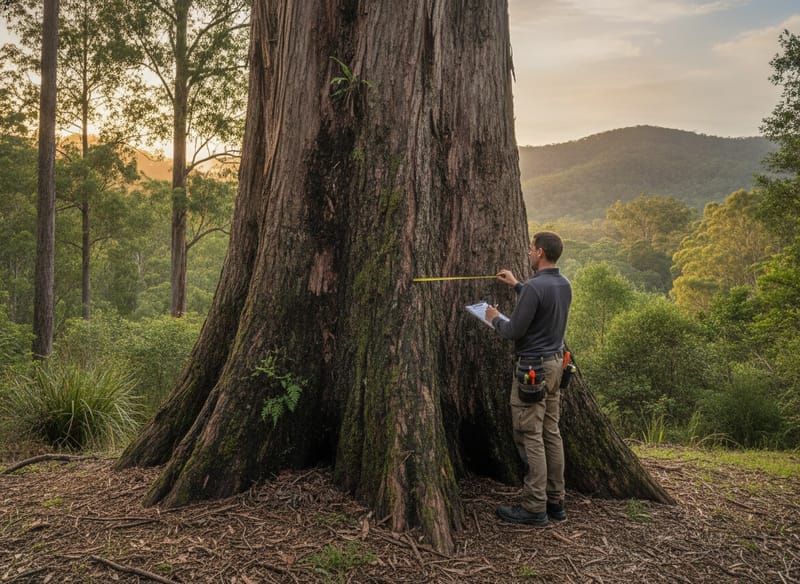
When assessing damaged trees that might be saved, our AQF Level 5 consulting arborists strictly follow AS4373 (Pruning of Amenity Trees) and AS4970 (Protection of Trees on Development Sites). We never resort to harmful lopping or topping, which only encourages weak, dangerous regrowth. Our rigorous adherence to Australian Standards ensures that any remaining trees are structurally sound, legally compliant, and genuinely safe to retain.
Operating across Bargara means understanding local environmental protections and municipal regulations. The Bundaberg Regional Council Planning Scheme 2015 includes specific mapping like the Coastal protection overlay and the Sea turtle sensitive area overlay. These are particularly critical around the beachfront and the Mon Repos rookery, dictating how vegetation must be managed to protect sensitive coastal habitats.
We also expertly navigate the aftermath of severe local weather events. Following the major Burnett River flood of March 2026, a specific disaster exemption is currently active until March 2027. This state clearing exemption allows landholders to remove fallen trees and woody debris necessary to prevent property or environmental damage without formal approval. However, this is an exemption from the application process, not from safe work practices or critical record-keeping. Our team provides all required photographic evidence and written arboricultural justifications to ensure your emergency tree removal remains strictly lawful.
Once the immediate storm debris is removed, your remaining trees require careful attention. High coastal winds can cause micro-cracking in branches and partial lifting of root systems that are not obvious from the ground. Saturated soils can also leave large canopy trees destabilised for weeks after the rain stops. We strongly recommend booking a follow-up assessment with our AQF Level 5 consulting arborist to evaluate the ongoing structural health of your remaining canopy. Preventative maintenance, including selective crown thinning and professional deadwooding prior to the next storm season (December to March), is the most effective way to safeguard your home against future severe weather events.
Storm cleanup costs depend on the volume of green waste, number of damaged trees, and machinery access.
We provide transparent, fixed quotes and detailed paperwork for insurance claims.
We provide storm damage cleanup services across Bargara and the wider Bundaberg region.
Contact our local team for thorough storm cleanup and tree restoration services.
Get a Free Quote